Overview
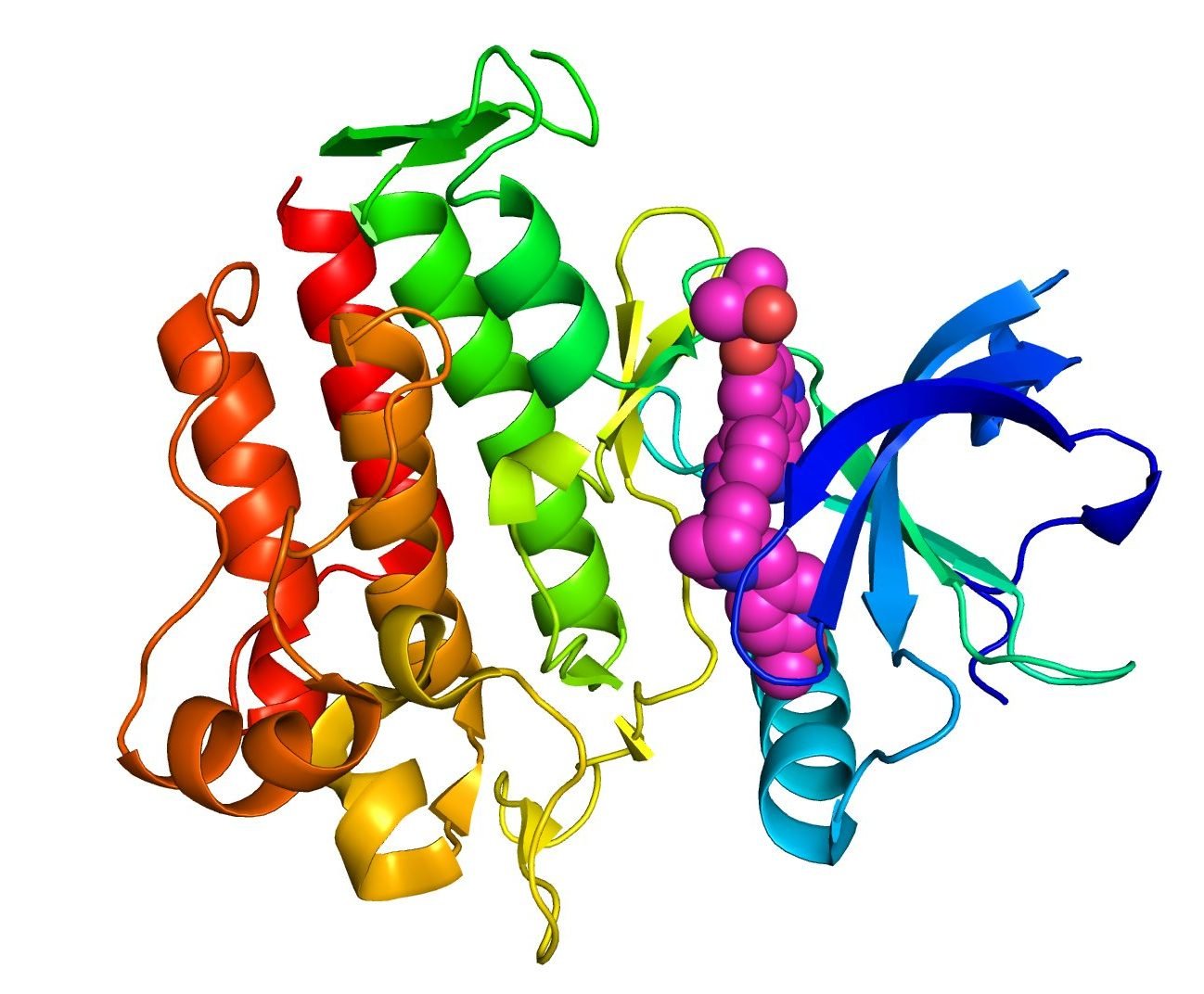
Even with deep-learning prediction available, template-based modelling remains the better route in several situations: when a close experimental template exists in the exact conformational state you care about, when a specific ligand-bound form must be reproduced, or when a predicted model needs its loops, termini and side chains rebuilt to a usable standard. We build, refine and validate such models and, importantly, state which parts are supported by the template and which are effectively invention.
Key Advantages
State-Specific Modelling
Where a target adopts distinct active, inactive or ligand-bound states, templates are chosen for the state your project needs rather than for global sequence identity alone.
Serious Loop Treatment
Loops are rebuilt with conformational sampling and energy scoring, with alternative conformations delivered when the loop is genuinely mobile instead of a single arbitrary pose.
Multi-Template Assembly
Different regions can be modelled from different templates where that is better supported, with the boundaries and their justification documented.
Validated Before Delivery
Every model passes geometry, packing and environment checks, and the report identifies regions not reliable enough to support design decisions.
Where This Service Is Used
Methods and Techniques Applied
What We Need From You
What You Receive
What We Compute and Report
Interpretation and Limitations
Computational predictions prioritise hypotheses; they do not independently establish binding, biological activity, therapeutic efficacy, safety or clinical validity. Performance depends on input quality, target class, the structural evidence available and the applicability domain of the selected methods. Scores used for ranking are comparative devices and should not be read as measured quantities. All deliverables are for research use only and are not intended for diagnostic or therapeutic use.
Specifications
| Item | Specification | Notes |
|---|---|---|
| Typical turnaround | 5–15 working days | Extensive loop refinement or multi-template assembly takes longer |
| Template identity | Best available | Below roughly 30% identity reliability drops sharply and we say so |
| Loops refined | All missing regions | Ensembles supplied for genuinely flexible loops |
| Validation | Full geometry report | Delivered with every model |
Service Workflow
Scientific Consultation
We discuss the objective, the decision it supports and the data you hold. Nothing is quoted before we understand what the result has to answer.
Feasibility Review
We check that the data, target class and available structural evidence can support the proposed approach, and say plainly where they cannot.
Technical Proposal
Scope, methods, deliverables, timeline and price are confirmed in writing, together with the limitations we expect to report.
Computation and QC
The analysis runs on pinned tool versions in a containerised environment, with quality checkpoints and method comparison where that is informative.
Report and Follow-Up
You receive the ranked results, the documented methods, the limitations and a proposed validation plan, plus support in interpreting them.
Is This the Right Service for You?
Choose this service when
Consider another service when
What Goes Wrong, and How We Handle It
The failure modes that produce confident-looking results which do not survive the next experiment. Each one is designed against rather than discovered afterwards.
Case Studies
Illustrative of the shape this work takes. Details are generalised, no client or target is identified, and scope and outcome vary with the system in question.
Questions We Are Asked Before Scoping
Note: ICDMO delivers computational (in silico) services. Results prioritise hypotheses for testing; they do not by themselves establish binding, biological activity, efficacy or safety. All deliverables are for research use only and are not intended for diagnostic or therapeutic use. Downstream experimental work is scoped separately and executed through qualified partners.
Get in Touch
about Homology Modeling & Loop Refinement
Tell us about the target, the data you hold and the decision the result needs to support. A scientist reviews every enquiry and replies within one business day.