Target Identification & Validation

AI Protein Structure Prediction

High-accuracy structure prediction for monomers, multimers, and complexes including protein–small molecule, protein–peptide, and protein–nucleic acid.

Ref A3Computational ServiceConfidence ReportedScoped After Feasibility Review
HomeServicesTarget Identification & ValidationAI Protein Structure Prediction

Overview

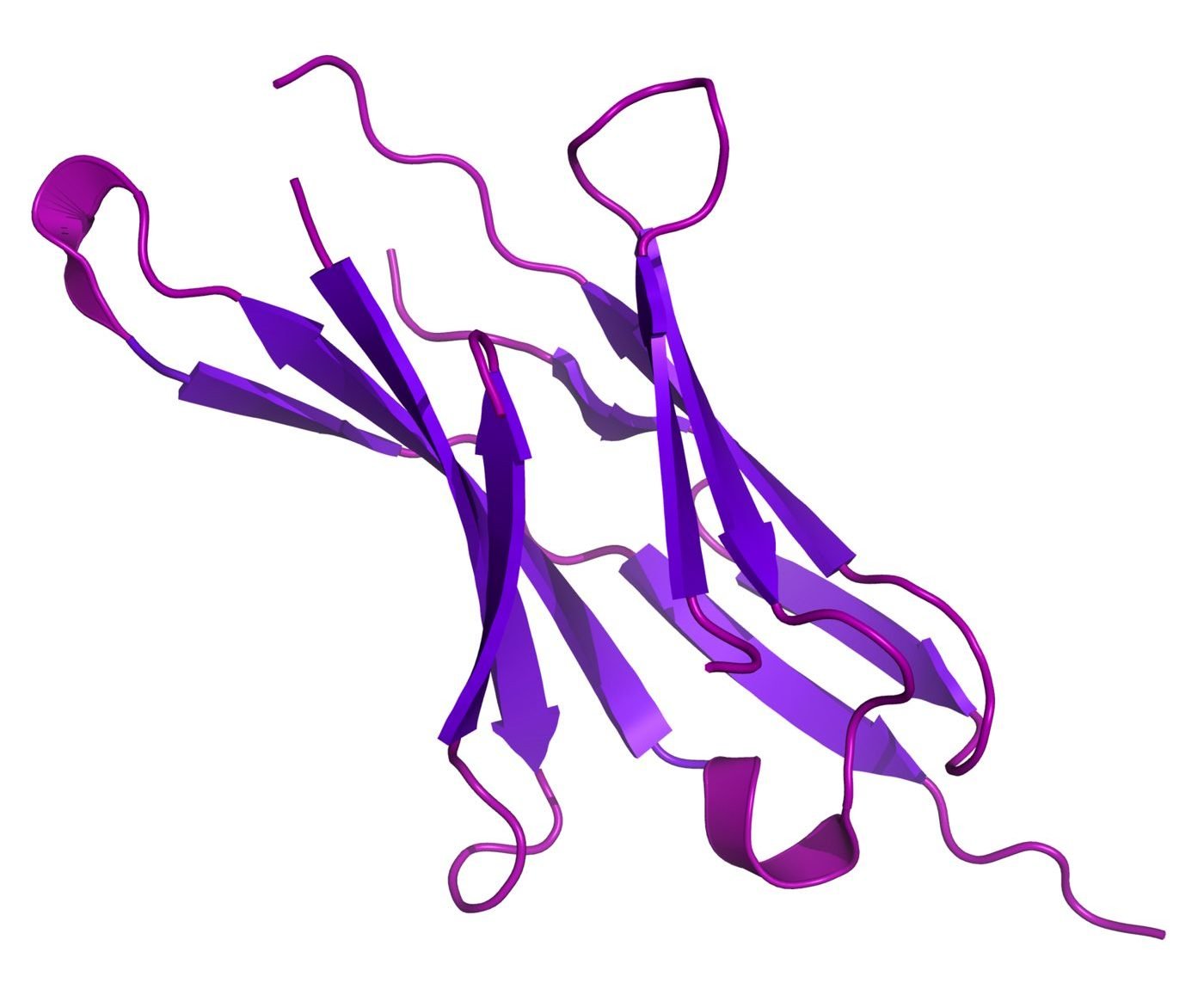
Structure prediction has become reliable enough to carry design decisions, but only when the prediction is delivered with its confidence properly interpreted. We predict monomers, multimers and complexes — including protein with small molecule, peptide, nucleic acid or ion — using current deep-learning systems, then evaluate the result the way a structural biologist would: per-residue confidence, interface confidence, geometry validation and comparison against any experimental evidence available. Regions where the model should not be trusted are marked explicitly rather than smoothed over.

Protein surfaceLigand in pockethot-spot residuesPocket detection · druggability score · hot-spot map
Schematic: pockets are detected across the whole surface, scored for druggability, and the residues carrying the binding energy are mapped before any screening begins.

Key Advantages

01

Complexes, Not Only Single Chains

Multimer and complex prediction covers protein–protein, protein–peptide, protein–nucleic acid and protein–ligand systems, which is where most project-relevant questions actually sit.

02

Confidence Read Correctly

pLDDT, PAE and interface scores are interpreted per region and per interface, distinguishing a genuinely disordered loop from a poorly modelled one — a distinction that changes what you do next.

03

Cross-Method Comparison

Independent predictors are run in parallel on demanding targets; convergence between architectures is stronger evidence than any single model, and divergence is reported.

04

Delivered Ready For Use

Models arrive energy-minimised, geometry-checked and prepared for docking or simulation, with alternative conformations supplied where the system is genuinely flexible.

Where This Service Is Used

Obtaining a working structure for a target with no experimental coordinates
Modelling a complex to understand how two partners engage before designing an inhibitor of the interaction
Predicting the structural consequence of a clinical or engineered mutation
Building antibody–antigen or receptor–ligand models to guide epitope-directed design
Filling missing loops, termini and domains in an existing experimental structure

Methods and Techniques Applied

MSA construction and depth assessment, which is often the single strongest determinant of prediction quality
Monomer, multimer and complex prediction with current deep-learning systems, multiple seeds and recycles
Per-residue and per-interface confidence analysis, including predicted aligned error interpretation
Geometry validation: Ramachandran statistics, rotamer outliers, clashes and bond geometry
Comparison with homologous experimental structures and with any client biophysical or crosslinking data
Energy minimisation, protonation assignment and preparation of the model for downstream docking or MD

What We Need From You

Sequences in FASTA for every chain in the assembly, with the intended stoichiometry
Ligand, cofactor or nucleic acid identity where a complex is required (SMILES or sequence)
Any experimental restraints available: crosslinking, mutagenesis, SAXS, low-resolution maps, known epitopes
The downstream use — docking, MD, design or interpretation — since it determines how the model is prepared

What You Receive

Predicted coordinates in PDB/mmCIF, with all ranked models rather than only the top one
Confidence report: per-residue and interface scores, with regions unsuitable for design marked
Validation summary covering geometry, clashes and agreement with experimental data where it exists
Prepared structure for downstream work, including protonation and minimisation
Annotated figures of the fold, the interfaces and the residues relevant to your question

What We Compute and Report

Three-dimensional coordinates for every chain and for the assembly, with all ranked models
Per-residue confidence values and inter-domain error estimates across the whole model
Interface confidence for each contact surface in a complex, reported separately from global confidence
Geometry validation statistics: Ramachandran distribution, rotamer outliers and clash score
Structural deviation against homologous experimental structures where any exist

Interpretation and Limitations

Computational predictions prioritise hypotheses; they do not independently establish binding, biological activity, therapeutic efficacy, safety or clinical validity. Performance depends on input quality, target class, the structural evidence available and the applicability domain of the selected methods. Scores used for ranking are comparative devices and should not be read as measured quantities. All deliverables are for research use only and are not intended for diagnostic or therapeutic use.

Specifications

ItemSpecificationNotes
Typical turnaround3–10 working daysLarge assemblies and difficult MSAs take longer
System sizeUp to several thousand residuesVery large assemblies are scoped individually
Models delivered5 ranked per systemWith per-model confidence so alternatives can be inspected
Complex typesProtein, peptide, DNA/RNA, ligandStoichiometry confirmed during scoping

Service Workflow

Step 01

Scientific Consultation

We discuss the objective, the decision it supports and the data you hold. Nothing is quoted before we understand what the result has to answer.

Step 02

Feasibility Review

We check that the data, target class and available structural evidence can support the proposed approach, and say plainly where they cannot.

Step 03

Technical Proposal

Scope, methods, deliverables, timeline and price are confirmed in writing, together with the limitations we expect to report.

Step 04

Computation and QC

The analysis runs on pinned tool versions in a containerised environment, with quality checkpoints and method comparison where that is informative.

Step 05

Report and Follow-Up

You receive the ranked results, the documented methods, the limitations and a proposed validation plan, plus support in interpreting them.

Is This the Right Service for You?

Choose this service when

The target, or the complex you care about, has no deposited experimental structure
A model is needed quickly to unblock docking, design or mutation interpretation
You need to know which regions of a model can carry a design decision and which cannot

Consider another service when

A close experimental template exists in the conformational state you need
Homology Modeling & Loop Refinement
Binding-mode certainty is required for chemistry decisions or publication
Protein–Ligand Co-Crystal Structure Analysis

What Goes Wrong, and How We Handle It

The failure modes that produce confident-looking results which do not survive the next experiment. Each one is designed against rather than discovered afterwards.

Site quality is assessed separately from global confidence, and we state plainly when a pocket is not modelled well enough to screen against.

Case Studies

The situation
A programme needed the binding geometry of a peptide ligand at a receptor for which only the apo fold was known.
What the work involved
Complex prediction was run across multiple seeds with an orthogonal method for comparison, interface confidence was assessed per contact surface, and the top models were energy-minimised and simulated briefly to test stability.
What came back
Two distinct binding modes, one of which was stable in simulation and consistent with existing mutagenesis. Both were delivered, with the mutations that would discriminate between them.

Illustrative of the shape this work takes. Details are generalised, no client or target is identified, and scope and outcome vary with the system in question.

Questions We Are Asked Before Scoping

Note: ICDMO delivers computational (in silico) services. Results prioritise hypotheses for testing; they do not by themselves establish binding, biological activity, efficacy or safety. All deliverables are for research use only and are not intended for diagnostic or therapeutic use. Downstream experimental work is scoped separately and executed through qualified partners.

Get in Touch
about AI Protein Structure Prediction

Tell us about the target, the data you hold and the decision the result needs to support. A scientist reviews every enquiry and replies within one business day.

Feasibility reviewed before any scope or price is fixed
Methods, parameters, confidence and limitations in every report
Confidentiality agreement available before data is shared

Submitting opens your email client with the enquiry addressed to service@icdmo.com.