Overview
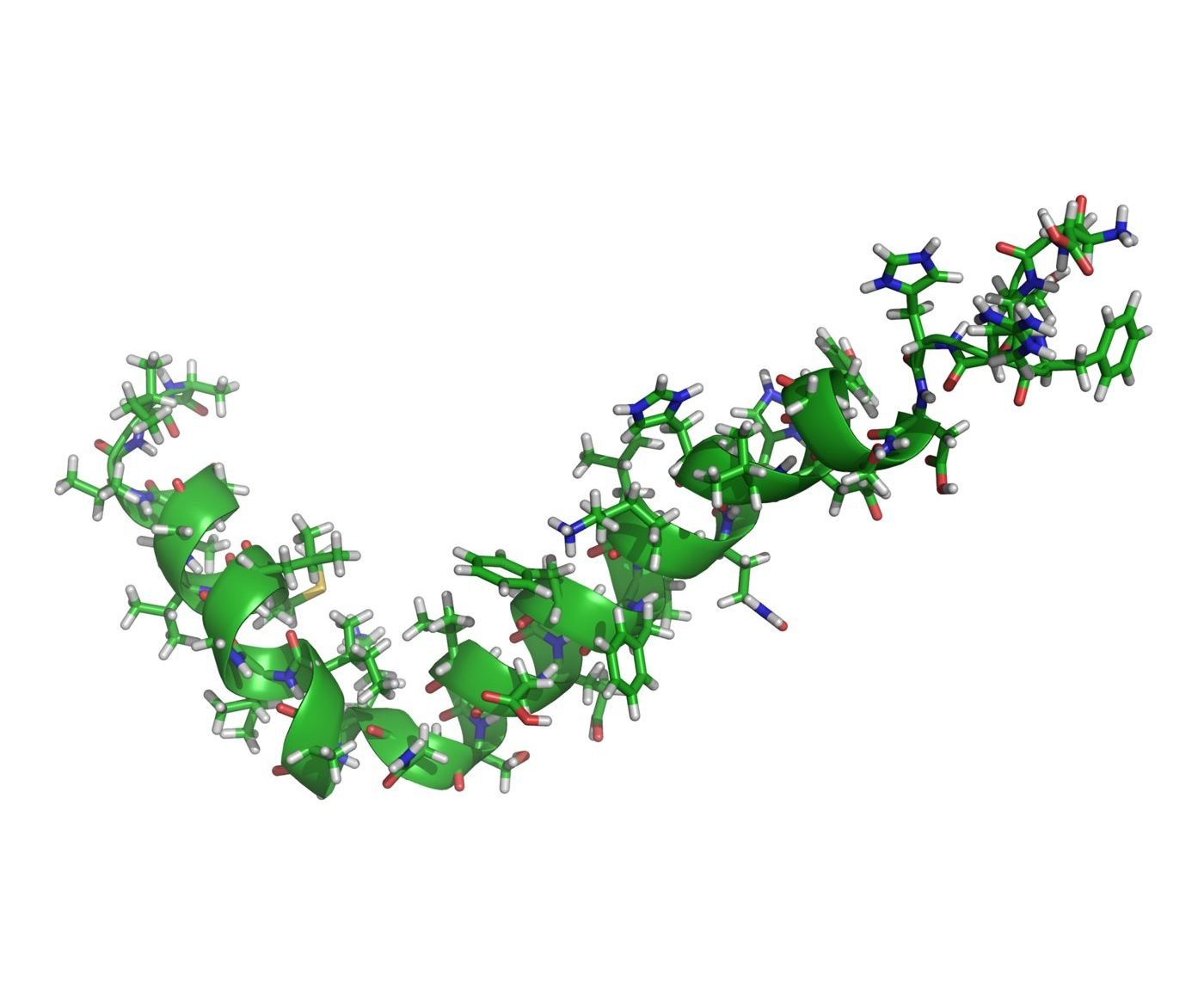
Linear peptides reach targets that small molecules struggle with — extended protein interfaces, extracellular receptors, shallow enzyme sites — and fail for predictable reasons: proteolysis, rapid renal clearance and poor membrane permeability. We design and optimise linear peptide sequences against a defined target site, then engineer against those failure modes with non-natural residues, terminal modifications, backbone changes and half-life extension strategies chosen deliberately rather than applied as a package.
Key Advantages
Designed Against The Interface
Sequences are designed in the structural context of the target site using backbone generation and sequence design, so binding rests on modelled geometry rather than motif similarity.
Protease Stability Engineered
Cleavage sites are predicted and addressed through D-amino acids, N-methylation, unnatural residues or terminal capping, with each change assessed for its effect on binding.
Synthesis Realism Maintained
Difficult sequences — aggregation-prone stretches, multiple cysteines, problematic couplings — are flagged during design so the proposals can actually be made.
Half-Life Strategy Considered
Where systemic exposure matters, lipidation, PEGylation and albumin-binding approaches are evaluated as part of the design rather than added afterwards.
Where This Service Is Used
Methods and Techniques Applied
What We Need From You
What You Receive
What We Compute and Report
Interpretation and Limitations
Computational predictions prioritise hypotheses; they do not independently establish binding, biological activity, therapeutic efficacy, safety or clinical validity. Performance depends on input quality, target class, the structural evidence available and the applicability domain of the selected methods. Scores used for ranking are comparative devices and should not be read as measured quantities. All deliverables are for research use only and are not intended for diagnostic or therapeutic use.
Specifications
| Item | Specification | Notes |
|---|---|---|
| Peptide length | 5–50 residues | Longer sequences are handled as protein design |
| Designs delivered | 15–60 sequences | Spanning the design hypotheses |
| Typical turnaround | 3–6 weeks | Including modelling and simulation |
| Output | Sequences, models, report | With modifications fully specified for synthesis |
Service Workflow
Scientific Consultation
We discuss the objective, the decision it supports and the data you hold. Nothing is quoted before we understand what the result has to answer.
Feasibility Review
We check that the data, target class and available structural evidence can support the proposed approach, and say plainly where they cannot.
Technical Proposal
Scope, methods, deliverables, timeline and price are confirmed in writing, together with the limitations we expect to report.
Computation and QC
The analysis runs on pinned tool versions in a containerised environment, with quality checkpoints and method comparison where that is informative.
Report and Follow-Up
You receive the ranked results, the documented methods, the limitations and a proposed validation plan, plus support in interpreting them.
Is This the Right Service for You?
Choose this service when
Consider another service when
What Goes Wrong, and How We Handle It
The failure modes that produce confident-looking results which do not survive the next experiment. Each one is designed against rather than discovered afterwards.
Case Studies
Illustrative of the shape this work takes. Details are generalised, no client or target is identified, and scope and outcome vary with the system in question.
Questions We Are Asked Before Scoping
Note: ICDMO delivers computational (in silico) services. Results prioritise hypotheses for testing; they do not by themselves establish binding, biological activity, efficacy or safety. All deliverables are for research use only and are not intended for diagnostic or therapeutic use. Downstream experimental work is scoped separately and executed through qualified partners.
Get in Touch
about Linear Therapeutic Peptide Design
Tell us about the target, the data you hold and the decision the result needs to support. A scientist reviews every enquiry and replies within one business day.