Stable Cell Line Generation Services
High-quality · Rapid turnaround · Fully validated stable clones
Overview
ICDMO provides comprehensive, high-quality stable cell line generation services designed to accelerate protein expression research, gene function studies, and precision genome editing programmes. Our platform supports over 150 validated host cell lines—including HEK293, CHO-K1, Jurkat, MCF-7, HT-29, and 3T3—delivering reproducible, project-ready stable clones tailored to every client's scientific and bioproduction objectives.
Combining proprietary expression vectors, high-throughput clone screening, and animal-component-free protocols, our team generates stable cell lines with consistent transgene expression and robust genetic stability across extended passaging. Every project is assigned a dedicated project manager who oversees timelines, troubleshooting, and data delivery from initial design through to certified material release.
Whether you need constitutive overexpression, inducible regulation, CRISPR-mediated knockout or knock-in, or long-term RNA interference, ICDMO has the expertise and infrastructure to support your project at every stage—from construct design to fully characterised, delivery-ready stable clones.
Highlights
Comprehensive Solutions for Stable Cell Line Generation

Our service portfolio spans the full spectrum of stable cell line engineering—from plasmid-based and lentiviral overexpression to precision genome editing via CRISPR/Cas9. We routinely work with primary cells, iPSC-derived lines, suspension cultures, and difficult-to-transfect cell types, providing a solution for virtually every research challenge. All constructs are sequence-verified prior to delivery, and every stable line undergoes multi-passage stability testing to confirm expression fidelity over time.
Platform Expertise and Process Optimisation

01
Vector Design & Optimisation
- Codon optimisation for enhanced expression
- Promoter selection matched to host cell
- Incorporation of WPRE and other stabilising elements
- Custom multi-cistronic constructs available
02
Cell Line Development & Screening
- Systematic host cell evaluation
- Transfection condition optimisation
- High-throughput FACS or antibiotic selection
- Limiting dilution monoclonal isolation
03
Advanced Genome Editing
- CRISPR/Cas9 knockout — biallelic verified
- HDR-mediated precise knock-in
- Custom shRNA / miRNA interference
- Off-target analysis on request
Core Services


Case Studies & Research Outcomes
The following representative publications illustrate how ICDMO-generated stable cell lines have advanced translational research across oncology, endocrinology, and infectious disease. All cell line models were custom-engineered and fully validated prior to experimental use.
Case Study 1 — Immuno-oncology: CAR-T Efficacy Modelling
Researchers required a luminescent tumour model to track CAR-T cell anti-tumour activity in vivo. ICDMO engineered Luc⁺ Nalm6 stable lines by lentiviral transduction, enabling real-time bioluminescence imaging (BLI) of tumour burden following tail-vein engraftment into NSG mice. The stable bioluminescent signal allowed longitudinal quantification of CAR-T therapeutic efficacy without animal sacrifice at each time point.
Cell Line Used: Lentiviral Stable Cell Line Service
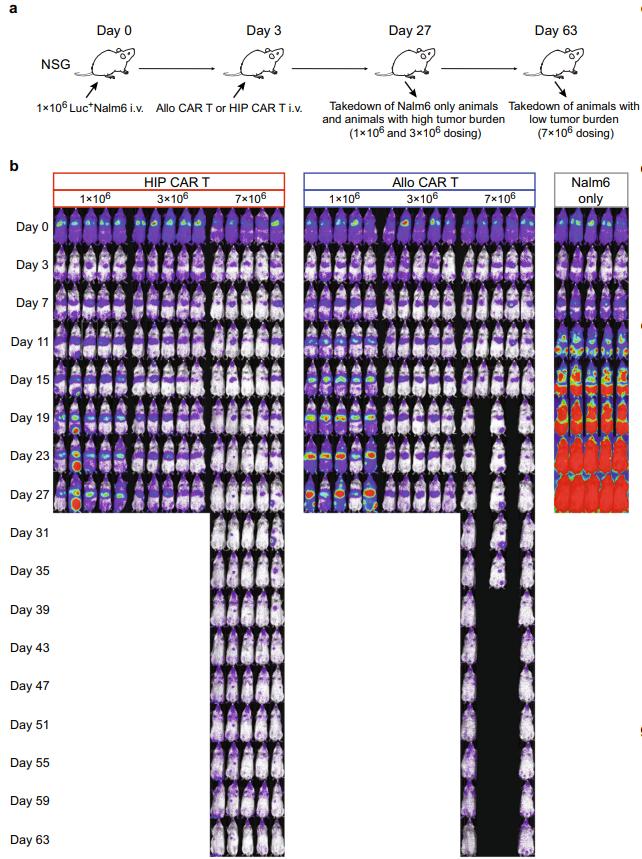
Figure 1. BLI tracking of Luc⁺ Nalm6 tumour growth and regression following CAR-T cell infusion in NSG mice. 1 × 10⁶ cells were engrafted per animal.
Case Study 2 — Endocrinology: GPCR Signalling in Reproductive Disease
To investigate the modulatory role of Frizzled-3 (FZD3) in follicle-stimulating hormone (FSH)-mediated steroidogenesis, the research team required stable HEK293 lines co-expressing FSHR and FZD3 at defined levels. ICDMO generated multi-transgenic stable lines using sequential selection, enabling co- immunoprecipitation and cAMP signalling assays that revealed FZD3's inhibitory role in FSH-stimulated steroid biosynthesis—providing mechanistic insight into polycystic ovary syndrome (PCOS) pathology.
Cell Line Used: GPCR Stable Cell Line Development
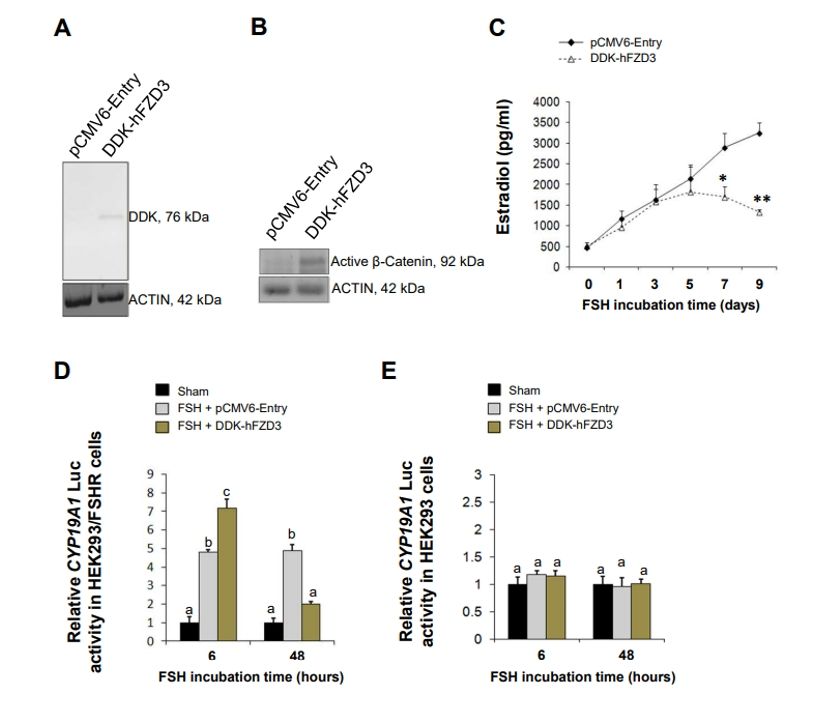
Figure 2. cAMP accumulation and steroidogenesis assays in FSHR/FZD3 co-expressing HEK293 stable lines demonstrating FZD3-mediated inhibition.
Case Study 3 — Virology: SARS-CoV-2 Receptor-Binding Assay Platform
A biosafe cell-based platform was required to compare receptor-binding kinetics of SARS-CoV-2 and SARS spike proteins without handling live virus. ICDMO generated ACE2 and TMPRSS2 dual-expressing A549 stable lines, which enabled quantitative binding assays using gold nanourchin-conjugated spike proteins. The stable expression platform provided reproducible surface receptor densities, ensuring data comparability across experimental batches and assay formats.
Cell Line Used: Multi-Transgene Stable Cell Line Service
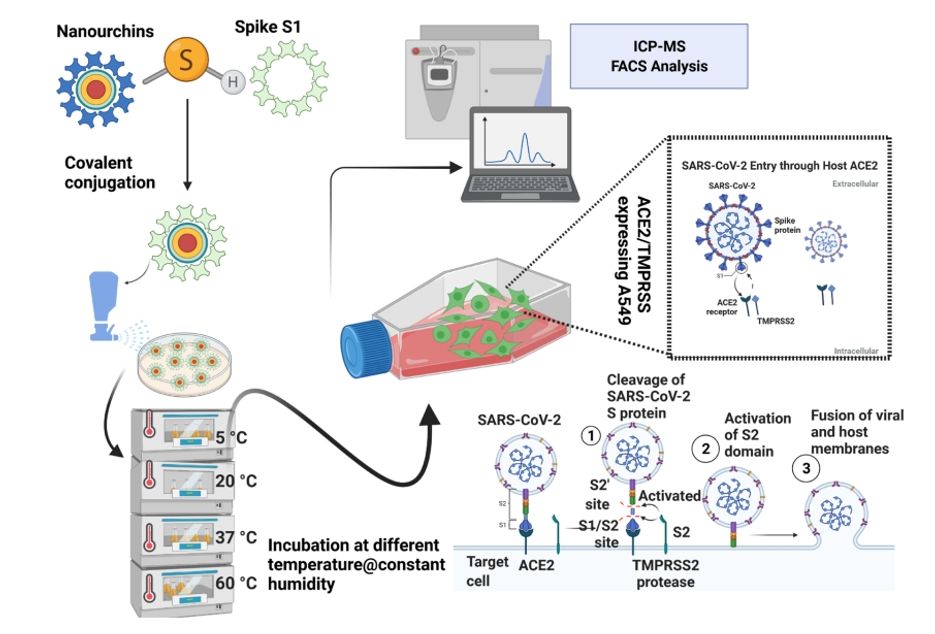
Figure 3. Receptor-binding comparison between SARS-CoV-2 and SARS spike proteins using gold nanourchin conjugates on ACE2/TMPRSS2-expressing A549 stable lines.
Service Support
Customised Construction Methods
| Service | Details | Methods |
|---|---|---|
| Gene Overexpression Stable Cell Lines | Constitutive expression: single or multi-gene cassettes | Lipofectamine™ Transfection, Electroporation, Lentiviral Transduction |
| Inducible Expression Stable Cell Lines | Tet-On / Tet-Off regulated expression system | Lipofectamine™ Transfection, Electroporation, Lentiviral Transduction |
| Gene Knockdown Stable Cell Lines | shRNA-mediated sustained gene silencing | Lipofectamine™ Transfection, Electroporation, Lentiviral Transduction |
| miRNA Overexpression Stable Cell Lines | Stable delivery of miRNA precursor sequences | Lipofectamine™ Transfection, Electroporation, Lentiviral Transduction |
| Gene Knock-out Stable Cell Lines | CRISPR/Cas9-mediated complete gene disruption | CRISPR/Cas9 gene editing system |
| Gene Knock-in Stable Cell Lines | Precision sequence insertion via HDR or NHEJ | Homology-Directed Repair (HDR) / Non-Homologous End Joining (NHEJ) |
Quality Control
- Genetic Validation: Sequence verification and digital-droplet PCR copy-number analysis confirm correct integration and transgene integrity in every delivered clone.
- Expression Validation: Target RNA is quantified by RT-qPCR; protein expression level and molecular weight are confirmed by Western blot and/or flow cytometry against project specification.
- Biosafety Certification: All delivered cell lines are certified mycoplasma-free by PCR and/or enzymatic assay. Sterility and adventitious agent testing are performed as standard.
Technical Workflow
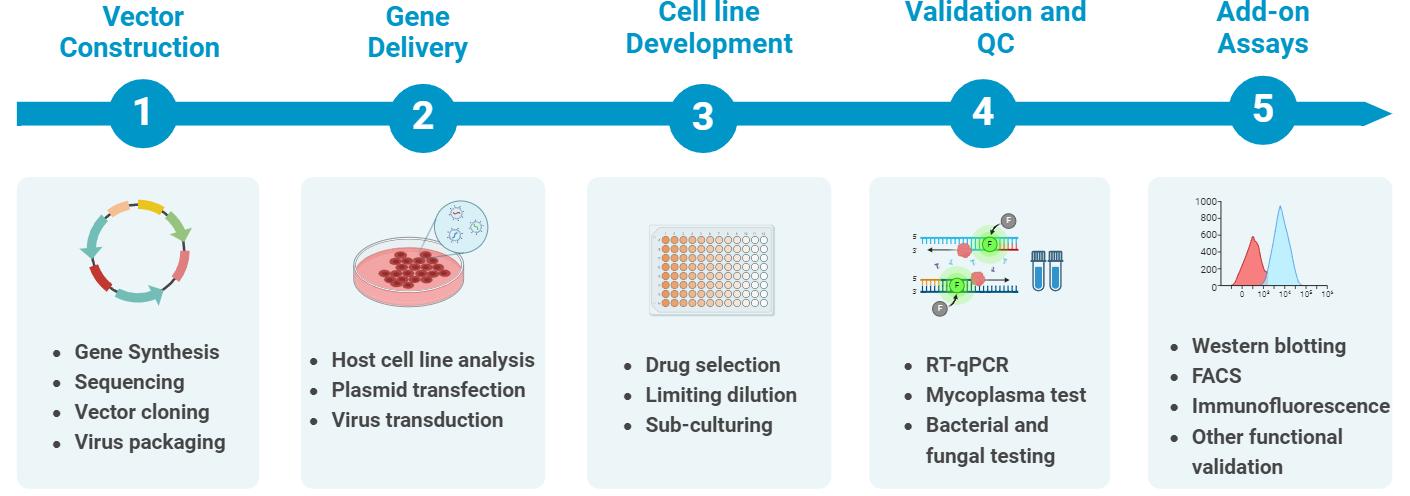
1
Precise selection of expression vector and gene target
2
Development of a tailored engineering strategy
3
Assembly of expression or knockdown constructs
4
Large-scale vector production with quality verification
5
Stable clone establishment through stringent selection
6
Comprehensive molecular validation — Western blot, PCR, sequencing
7
Ongoing technical guidance and troubleshooting support
8
Delivery of verified clones with full protocols and data package
ICDMO brings together multidisciplinary expertise in molecular biology, cell engineering, and process development to deliver stable cell lines that meet the highest standards of reproducibility and genetic integrity. Our team has successfully completed projects for clients in academic research, biotech, and pharmaceutical discovery worldwide.
Ready to discuss your project? Our scientific team is available to consult on experimental design, cell line selection, and delivery timelines. Request a no-obligation quote today.