Overview
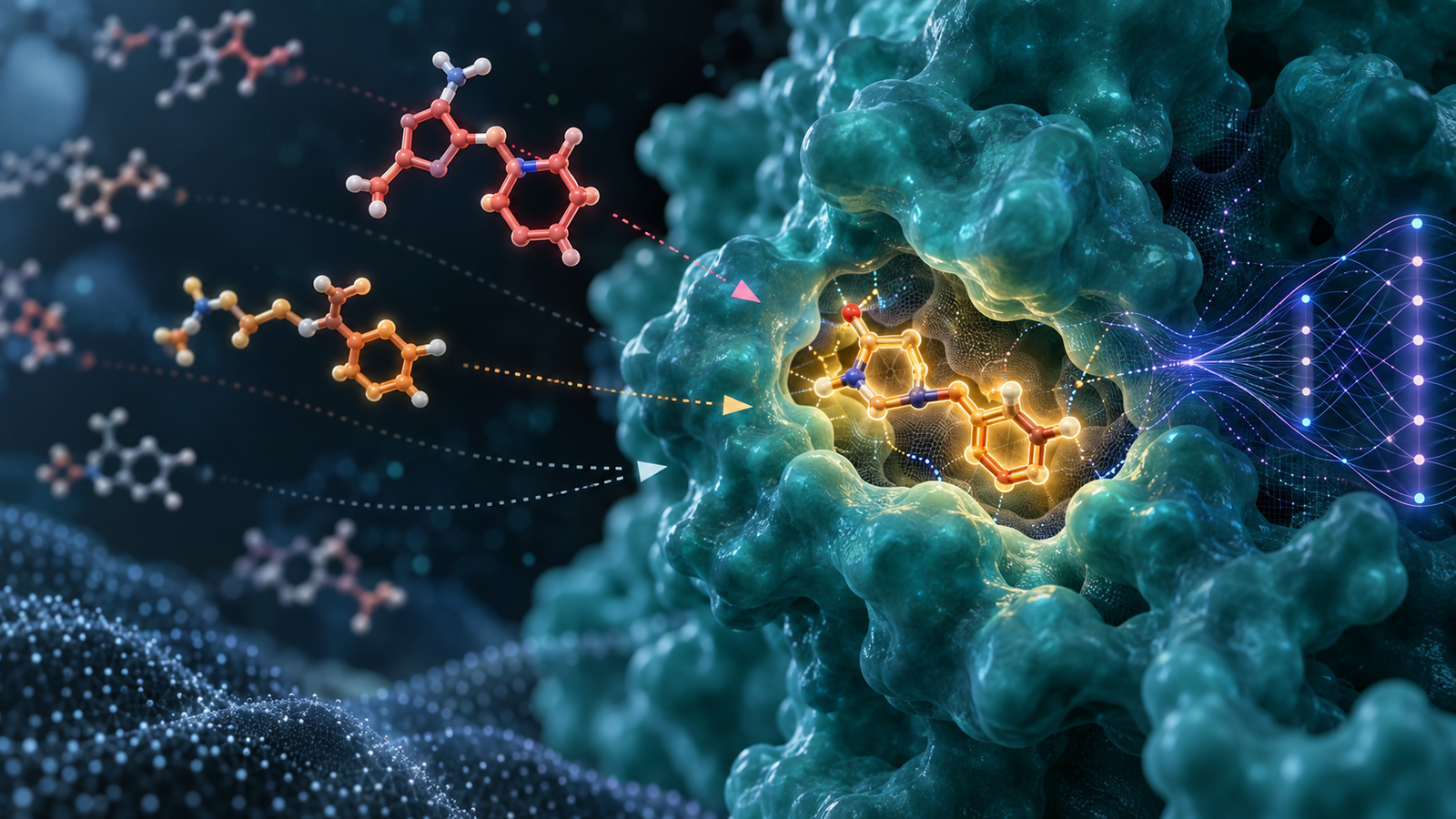
Degrader programmes are expensive to run empirically, and the early decisions — is this target degradable, which ligase, which warhead — set most of the cost that follows. We assess target degradability from lysine accessibility, turnover and surface compatibility, shortlist E3 ligases on expression and structural grounds, and run virtual screening or ligand triage to find warhead chemistry. The output is a reasoned starting point rather than a list of compounds to make on hope.
Key Advantages
Degradability Assessed Before Chemistry
Lysine availability, surface accessibility, protein half-life and known ubiquitination sites are examined first, because a target that cannot be productively ubiquitinated will not be rescued by better linkers.
Ligase Choice Reasoned, Not Defaulted
CRBN and VHL are the obvious starting points but not always the right ones. Tissue expression, surface complementarity with your target and resistance liabilities are weighed explicitly.
Warhead Triage
Existing binders are assessed for exit vectors that can carry a linker without destroying affinity, and virtual screening is applied where no suitable binder exists.
Screening Output Interpreted
Where you already have screening data, we analyse it for structure–degradation relationships rather than treating potency and degradation as the same signal.
Where This Service Is Used
How the Work Is Performed
What We Need From You
What You Receive
Questions We Are Asked Before Scoping
Can you predict whether our target is degradable?
- We can assess the structural and biological factors that make degradation plausible and identify targets that clearly lack them. Degradability ultimately depends on cellular context and is confirmed empirically.
Do we need a co-crystal structure to start?
- No, but knowing the warhead binding mode matters a great deal, because exit vector choice depends on it. Where no structure exists we model the complex and treat the vector analysis as provisional.
What if no usable warhead exists?
- Then virtual screening or de novo design for a binder with a suitable exit vector becomes the first step, and we would scope that before any degrader chemistry.
Interpretation and Limitations
This is a computational (in silico) service. Designs and predictions prioritise hypotheses and direct experimental effort; they do not by themselves establish that an edit, construct, molecule or assay will perform as intended. Laboratory execution — editing, cloning, expression, synthesis and testing — is planned with you and carried out by your own team or a qualified partner. Deliverables are for research use only and are not intended for diagnostic or therapeutic use.
Specifications
| Item | Specification | Notes |
|---|---|---|
| Typical turnaround | 3–6 weeks | Depending on whether screening is included |
| Ligases assessed | 2–6 candidates | Shortlisted before detailed modelling |
| Screening scale | Up to 10⁸ compounds | Where warhead discovery is in scope |
| Output | Assessment, models, shortlist | With explicit go/no-go reasoning |
Service Workflow
Scientific Consultation
We discuss the objective, the decision it supports and the material and data you already hold.
Feasibility Review
We check that the target, system and available information can support the approach, and say plainly where they cannot.
Technical Proposal
Scope, methods, deliverables, timeline and price are confirmed in writing, together with the limitations we expect to report.
Design and Analysis
The design work runs on documented tools and parameters, with quality checks and alternatives compared where that is informative.
Delivery and Follow-Up
You receive the designs, the supporting analysis and a validation plan, plus support interpreting the results once the experiments run.
Is This the Right Service for You?
Choose this service when
Consider another service when
What Goes Wrong, and How We Handle It
The failure modes that produce confident-looking results which do not survive the next experiment. Each one is designed against rather than discovered afterwards.
Case Studies
Illustrative of the shape this work takes. Details are generalised, no client or target is identified, and scope and outcome vary with the system in question.
Note: ICDMO delivers computational (in silico) services. Results prioritise hypotheses for testing; they do not by themselves establish binding, biological activity, efficacy or safety. All deliverables are for research use only and are not intended for diagnostic or therapeutic use. Downstream experimental work is scoped separately and executed through qualified partners.
Get in Touch
about Protein Degrader Discovery & Screening Support
Tell us about the target, the data you hold and the decision the result needs to support. A scientist reviews every enquiry and replies within one business day.